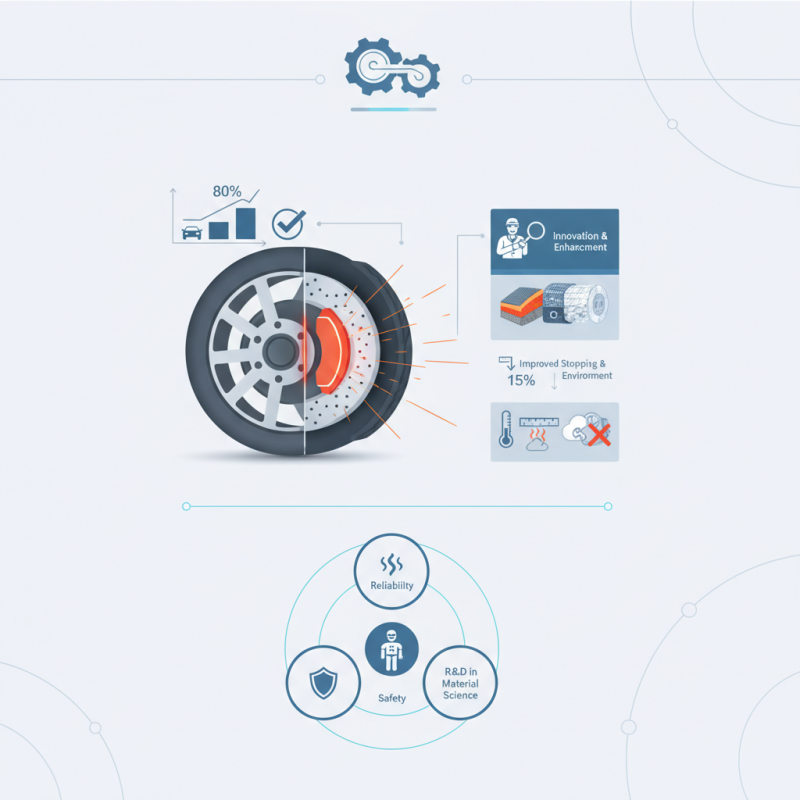
Friction plays a crucial role in the performance of braking systems, significantly influencing vehicle safety and control. According to industry reports, friction accounts for over 80% of a braking system's overall effectiveness. Understanding this enables engineers and manufacturers to innovate and enhance brake technologies. But what is the role of friction in braking systems?
When brakes are applied, friction between the brake pads and the rotors generates the force needed to slow down a vehicle. This process involves complex interactions that depend on material composition and surface texture. For instance, carbon composites and metallic materials have distinct friction characteristics. Research indicates that optimally designed brake systems can yield a 15% improvement in stopping distance.
However, the reliance on friction is not without challenges. Excessive heat generated from friction can lead to brake fade, a condition where brakes lose effectiveness. Additionally, different environmental factors, such as moisture or dirt, can alter the friction coefficient. This underscores the need for ongoing research and development in material science and engineering practices to ensure reliability and safety in braking systems.
Friction plays a crucial role in the mechanics of braking systems. It is the force that opposes motion between two surfaces. The effectiveness of brakes largely depends on the friction generated between brake pads and rotors. Understanding this force entails grasping its fundamental aspects.
The coefficient of friction varies depending on materials. Some combinations yield greater friction, enhancing stopping power. In contrast, low-friction materials can lead to longer stopping distances. This variability raises important questions about safety and efficiency. Many drivers overlook the significance of maintaining brake components. Regular inspections can prevent ineffective braking due to wear and tear.
Moreover, external factors influence friction. Temperature changes affect brake performance. Hot environments can lead to brake fade, compromising safety. Moisture can also reduce friction, particularly in rainy conditions. Real-world driving reveals that friction is not always predictable. Drivers must adapt and remain vigilant about how their vehicle behaves in different conditions. Understanding these elements is essential for safe driving.
Understanding the dependence of braking systems on friction is crucial. Braking systems can be categorized mainly into disc brakes and drum brakes. Disc brakes use a rotor and caliper system, while drum brakes rely on expanding shoes inside a drum. The efficiency of both systems is heavily influenced by the friction material chosen.
According to a recent study, nearly 70% of the braking power in vehicles comes from the interaction between these components. Effective friction materials enable better heat dissipation. This is vital during repeated braking actions, such as driving down a hill. A report highlighted that higher friction coefficients could improve stopping distances by up to 30%. However, using overly aggressive materials can cause premature wear and tear.
Interestingly, not all friction is beneficial. For instance, excessive heat can lead to brake fade. This means that the braking response diminishes when brakes are hot. Engineers must also consider environmental impacts. Using certain friction materials may contribute to air pollution and degraded performance. Thus, the balance between friction efficiency and material durability requires continuous evaluation.
Friction plays a critical role in vehicle braking systems. It is the force that allows cars to stop effectively. The interaction between brake pads and rotors generates friction, converting kinetic energy into heat. This process shortens the stopping distance of a vehicle.
When a driver applies the brakes, the amount of friction directly affects how quickly the car can halt. Increased friction results in shorter stopping distances, while reduced friction can lead to longer distances. Weather conditions, such as rain or snow, can alter the frictional force. Drivers must be aware of how these factors impact their vehicle's braking efficiency.
Even with advanced technology, not all braking systems are perfect. Some may experience wear over time, affecting friction levels. It is crucial for drivers to monitor their brakes regularly. Ignoring potential issues can lead to dangerous outcomes. Understanding the intricacies of friction is essential for safe driving.
Understanding the role of friction in braking systems is crucial for safety and performance. Key factors affecting friction include material properties and design choices. For instance, the coefficient of friction can vary significantly between different pad and rotor materials. A 2021 report from the Society of Automotive Engineers indicates that optimized materials can enhance friction by up to 30%. Composite brake pads exhibit better performance due to their unique composition.
The design of braking systems also plays a vital role. A well-designed system should ensure even distribution of pressure. Improper alignment can lead to uneven wear and reduced friction efficiency. Data shows that 25% of braking performance can be lost due to poor component design. This highlights the importance of rigorous testing. Many systems underperform simply due to overlooked design flaws. Balancing material choice with innovative design is essential for maximizing friction.
Consideration of environmental factors is necessary too. Temperature variations affect friction levels. In high heat situations, materials can degrade, altering friction characteristics. A recent study found that heated brake pads can lose up to 50% of their effectiveness. This showcases the complex interplay between environment and material. Regular assessments and updates in material science and design practices are needed to improve braking performance.
| Material Type | Coefficient of Friction | Temperature Resistance (°C) | Wear Rate (mg/km) | Application |
|---|---|---|---|---|
| Ceramic | 0.35 - 0.45 | 200 | 50 | Passenger Cars |
| Metallic | 0.4 - 0.6 | 300 | 100 | High-Performance Vehicles |
| Organic | 0.3 - 0.4 | 150 | 70 | Budget-Friendly Vehicles |
| Semi-Metallic | 0.5 - 0.65 | 250 | 90 | SUVs and Trucks |
Friction is essential for braking systems. It determines the effectiveness and safety of vehicles when stopping. Regular maintenance practices can greatly influence friction performance. According to industry reports, nearly 30% of braking issues stem from poor maintenance. Ensuring proper brake pad thickness is vital. Worn pads reduce friction and increase stopping distances.
Using the correct brake fluid is another key factor. Contaminated fluid can cause brake failure. In fact, reports show that about 20% of brake system problems arise from fluid maintenance neglect. Additionally, keeping brake components clean can prevent unnecessary wear. A clean rotor surface ensures optimal friction levels.
Drivers often overlook the importance of temperature management. High temperatures can alter the frictional properties of brake materials. Monitoring brake temperature can extend the lifespan of the system. Many experts recommend regular inspections. They can reveal hidden issues before they become major problems. These simple practices can enhance overall braking performance, leading to safer driving experiences.
: The two main types are disc brakes and drum brakes. Each has a different mechanism.
Friction significantly impacts braking power. Nearly 70% of stopping ability relies on friction materials.
The chosen friction material affects heat dissipation and stopping distances. Higher friction can reduce stopping distance.
Excessive heat can cause brake fade, leading to reduced braking response. This can be dangerous.
Well-designed systems ensure pressure distribution. Poor design can cause up to 25% loss in performance.
Regular maintenance, like checking pad thickness, keeps friction optimal. Worn pads should be replaced promptly.
Contaminated brake fluid can lead to failure. About 20% of brake issues arise from fluid neglect.
High temperatures can degrade materials, impacting their effectiveness. Monitoring temperature is vital.
Inspections help identify hidden problems early. They can enhance overall braking safety and performance.
Drivers often neglect fluid quality and temperature management. These oversights can lead to serious brake issues.
Friction plays a crucial role in braking systems, acting as the primary force that slows down or stops vehicles. Understanding what is the role of friction in braking systems involves exploring the science behind it, including the fundamentals of friction and how it impacts various types of braking systems. Different braking mechanisms, whether disc or drum, rely heavily on friction to convert kinetic energy into thermal energy, effectively reducing the vehicle's speed.
Moreover, factors such as the materials used for brake pads, rotors, and their design can significantly influence friction performance. Adequate maintenance practices are essential to optimize this friction, ensuring efficient braking and safety on the road. By examining these aspects, we gain insight into how crucial friction is for effective braking and the overall performance of vehicles.

MOAD AUTO