When it comes to vehicle safety, understanding what materials are used in brake pads is essential. Brake pads play a critical role in ensuring your vehicle stops effectively. The right materials can impact overall performance, durability, and noise levels.
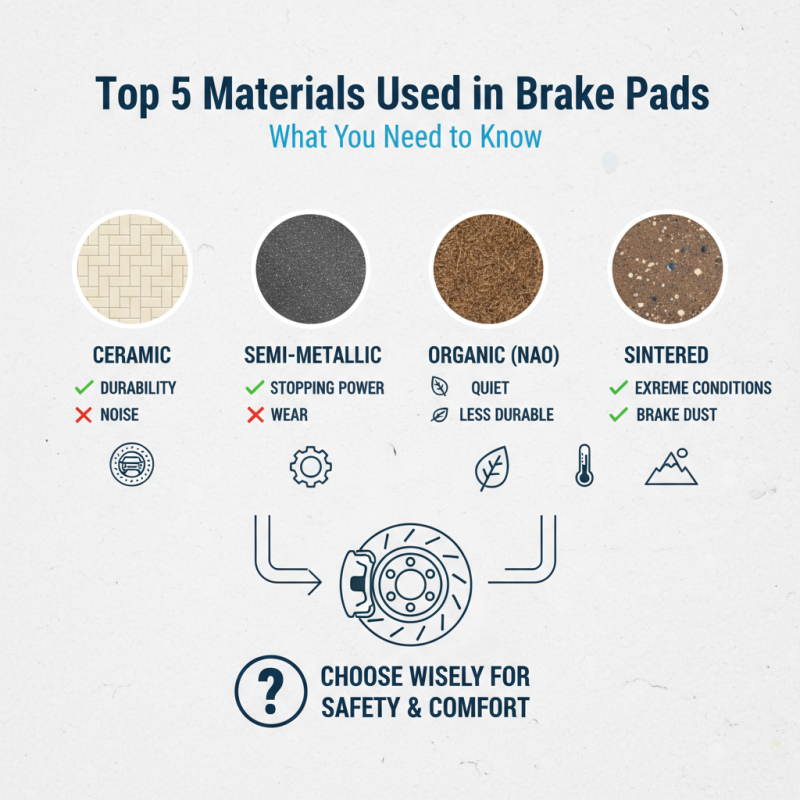
Different types of brake pads utilize various materials, each with unique properties. Some rely on organic compounds, while others use metallic components. For example, ceramic brake pads are known for durability but can sometimes produce more noise during braking. On the other hand, semi-metallic pads provide excellent stopping power, but may wear down faster.
As you explore the top five materials used in brake pads, consider the pros and cons of each. This awareness can lead to better choices for both safety and comfort. The selection of brake pads can define your driving experience. It’s crucial to weigh the options carefully.
Top 5 Materials Used in Brake Pads: An Overview of Common Types
Brake pads are crucial for vehicle safety, and understanding the materials used in their construction is vital. The most common materials include organic, metallic, semi-metallic, and ceramic compounds. Each type offers distinct advantages and drawbacks.
Organic brake pads are made from compounds like rubber and resin. They are quieter and produce less dust, but they can wear out quickly. Semi-metallic pads contain metal fibers that enhance durability and heat resistance. However, they may create more noise and dust. According to industry reports, nearly 50% of vehicles use semi-metallic pads due to their performance characteristics.
Ceramic brake pads are gaining popularity for their low noise levels and low dust emission. Although they generally cost more, their longevity can justify the investment. According to recent studies, ceramic pads can last up to 70,000 miles under normal driving conditions. However, their effectiveness can diminish in extreme heat, leading drivers to reconsider usage in high-performance environments.
In contrast, the cost-effectiveness of metallic pads often attracts budget-conscious consumers. Yet, the trade-off may involve compromising on comfort and cleanliness. In evaluating brake pad materials, it’s essential to weigh factors like performance, longevity, and budget to make informed decisions.
Top 5 Materials Used in Brake Pads
This chart provides an overview of the five most common materials used in brake pads, showcasing their respective market usage percentage. Understanding the materials can help in choosing the right brake pads for your vehicle.
Understanding the Importance of Brake Pad Material Selection in Vehicle Safety
The material used in brake pads significantly affects vehicle safety. Brake pads are essential components of a vehicle's braking system. They create the necessary friction to slow down or stop your car. Understanding the right materials is crucial for optimum performance.
Common materials include organic, metallic, and ceramic compounds. Each type has its pros and cons. Organic pads are quieter but wear out faster. Metallic pads often offer better performance but can create noise and dust. Ceramic pads strike a balance, offering durability without excessive noise.
Choosing the wrong material can lead to safety risks. Inadequate braking performance can compromise control. It's vital to consider your driving style and environment. Frequent high-speed driving demands more robust materials. A lack of knowledge about brake pad materials can lead to costly mistakes. Be mindful when making choices for your vehicle.
Comparative Analysis: Performance and Longevity of Different Brake Materials
When it comes to brake pads, various materials are used, each offering unique performance characteristics. A comparative analysis reveals that organic, semi-metallic, and ceramic materials hold significant positions in the market. According to industry reports, organic brake pads are quieter and provide good initial bite, though they tend to wear out faster—lasting approximately 30,000 miles.
On the other hand, semi-metallic pads excel in heat dissipation, which can improve their longevity to around 50,000 miles. However, they might produce more noise. Ceramic pads provide a balanced option, offering durability and less dust, often lasting between 40,000 to 70,000 miles. Their performance is often rated highly among consumers, but they may have higher initial costs.
Tip: If you prioritize quiet and smooth braking, consider organic pads. However, if your driving involves heavy loads or high speeds, opt for semi-metallic or ceramic pads for better heat management. Many drivers overlook the importance of regular inspections; worn pads can compromise braking efficiency. Reflecting on these differences is crucial for making an informed choice about your vehicle's brake system.
Top 5 Materials Used in Brake Pads
| Material Type |
Performance |
Longevity |
Noise Level |
Cost |
| Organic |
Good stopping power |
Average (30,000 - 50,000 miles) |
Moderate |
Low |
| Semi-Metallic |
Excellent bite and fade resistance |
Good (30,000 - 60,000 miles) |
High |
Medium |
| Ceramic |
Excellent noise control and braking |
High (50,000 - 70,000 miles) |
Low |
High |
| Carbon Composite |
Outstanding performance for high-end vehicles |
Very high (70,000 miles +) |
Very low |
Very high |
| Asbestos (Banned in Many Areas) |
Good performance but health risks |
Average (30,000 - 50,000 miles) |
Moderate |
Low |
Eco-Friendly Brake Pads: Trends in Sustainable Materials and Practices
The automotive industry is increasingly leaning towards sustainability. Eco-friendly brake pads are gaining traction. These pads often use natural fibers and environmentally friendly resins. Organic materials like rubber and cork reduce reliance on petroleum-based products.
Many manufacturers are exploring innovative materials. Bamboo and recycled textiles are emerging as viable options. These materials not only minimize environmental impact but also perform well under diverse conditions. Despite these advancements, the adoption rate still needs improvement. Some consumers remain skeptical about the effectiveness of eco-friendly alternatives.
Awareness plays a crucial role in this transition. More information about these sustainable products is needed. Education can drive acceptance and change. Conversations about eco-friendly brake pads should continue. It's essential to challenge the norm and rethink traditional automotive practices.
Future Innovations in Brake Pad Materials: Toward Enhanced Safety and Efficiency
Future innovations in brake pad materials are aimed at enhancing safety and efficiency. As automotive technology advances, manufacturers are exploring new compositions. Lightweight materials can reduce the overall vehicle weight, leading to better fuel efficiency. For instance, composites combining ceramic and metallic elements show promise due to their durability and heat resistance.
Tips: Always check for the latest advancements in brake pad technology. Staying informed can help you make safer choices when purchasing replacements.
Another exciting development is the shift towards eco-friendly materials. Manufacturers are experimenting with organic and recycled components. These not only reduce environmental impact but also often perform just as well as traditional materials. The challenge remains: balancing performance with sustainability can be tricky.
Tips: Don’t overlook the importance of regular brake maintenance. Even the best materials can fail if not properly maintained.
As we look ahead, the demand for smarter, safer braking solutions continues to rise. Enhanced materials could lead to braking systems that offer quicker response times. However, the industry must navigate the complexities of innovation and consumer trust.
Conclusion
Brake pads are essential components of vehicle safety, and understanding what materials are used in brake pads is crucial for maintenance and performance. The commonly used materials include organic, metallic, ceramic, and semi-metallic options, each offering distinct advantages and disadvantages in terms of performance, durability, and noise levels. Selecting the right brake pad material can significantly impact a vehicle's braking efficiency and lifespan.
As the automotive industry continues to evolve, eco-friendly brake pads are gaining popularity due to the increasing demand for sustainable materials. Innovations in brake pad technology are also on the rise, aimed at enhancing safety and efficiency while minimizing environmental impact. Understanding these trends and the characteristics of various brake pad materials can help consumers make informed decisions that prioritize both safety and sustainability.

 MOAD AUTO