Brake problems rarely begin with a dramatic failure. More often, the first clues are small: a pedal that feels softer than usual, a faint squeal at a quiet intersection, or a steering wheel that trembles during a gentle stop. Spotting these changes early can help drivers seek a qualified inspection before braking performance worsens. This guide explains how to identify brake system failures early, what common warning signs may mean, and when a vehicle should not be driven.
Brake & Front End editor Andrew Markel is an established voice in automotive service journalism. A practical paraphrase of the advice brake professionals share is this: changes in brake feel deserve attention before they become stopping problems. That is a reminder, not a diagnosis. A squeal may have several causes, while a sinking pedal, grinding noise, or brake warning light calls for prompt professional assessment. Don’t guess.
The guide focuses on observable details: whether the pedal feels spongy, whether the vehicle pulls to one side, and whether a burning smell follows repeated stops. Drivers can note when symptoms occur and describe them clearly to a technician. They should avoid crawling beneath an unsupported vehicle or relying on a quick visual check as proof that the brakes are safe. Some warning signs are easy to miss; even experienced drivers can overlook a gradual change.
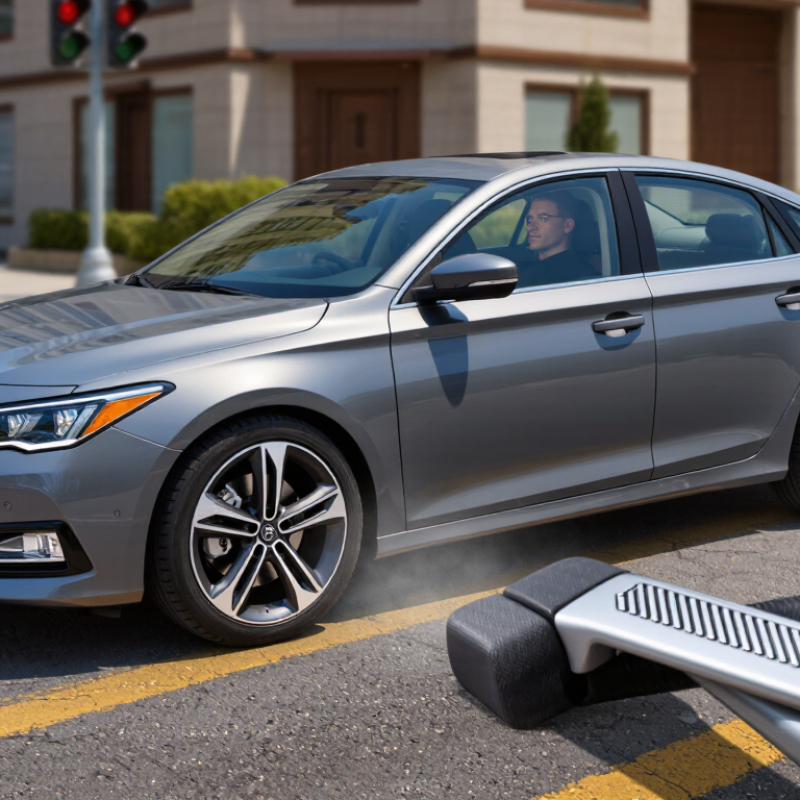
Safe braking depends on a chain of parts working together: the pedal, hydraulic lines, fluid, calipers, pads, rotors, and anti-lock braking system sensors. A soft pedal can signal air or a fluid leak. A pull to one side may point to uneven friction or a sticking caliper. Listen for grinding, too. It can mean the pad material is nearly gone and metal is contacting the rotor. Small clues matter.
The U.S. National Highway Traffic Safety Administration’s FMVSS No. 135 sets performance requirements for covered light vehicles. In a specified cold-effectiveness test, the standard limits stopping distance from 100 km/h to 70 meters. It also evaluates braking under other conditions, including fade and recovery. These are controlled test results, not a guarantee that an aging vehicle will stop the same way on a wet, worn road. Details matter.
That gap is easy to overlook. A warning light may stay off while one inner pad wears faster than its outer pair. Check fluid level, pad thickness, rotor condition, and warning indicators during routine service; investigate changes in pedal feel promptly. FMVSS No. 135 provides a useful baseline, but inspection reveals what a test cannot: the condition of the parts fitted to a particular vehicle.
Brake pads thinner than 3 mm deserve prompt inspection, even if the car still stops normally. At that thickness, the remaining friction material is limited, and wear can accelerate quickly. A thin pad may also overheat more easily during repeated hard stops or long downhill driving. Check both inner and outer pads when possible; they do not always wear evenly. A quick look through a wheel can be misleading. The pad’s backing plate is not friction material.
Look for a high-pitched squeal, grinding, vibration, or the car pulling to one side. These signs do not identify one exact fault, but they should not be ignored. Grinding can mean the friction material is gone and metal is contacting the rotor. That can cause more damage. A soft or sinking pedal needs urgent professional attention. If braking feels unsafe, avoid driving and arrange assistance.
Use 3 mm as a reason to book an inspection, not as a universal replacement rule. Vehicle guidance and pad designs differ, and a technician can measure the thinnest pad accurately. Ask them to check rotor condition, calipers, and uneven wear too. I have seen a single measurement miss the real issue: one side was nearly worn out while the visible pad looked acceptable. A little uncertainty is worth admitting. When did you last check?
DOT 3 brake fluid has minimum boiling points of 205°C dry and 140°C wet. That difference matters. “Dry” describes fluid with very little water; “wet” represents fluid that has absorbed moisture. Brake fluid can take in moisture over time, even in a sealed system. As moisture increases, the fluid’s boiling resistance drops. This matters during repeated stops or a long downhill drive, when braking creates heat.
Watch for a pedal that feels unusually soft, travels farther, or changes after braking. These clues deserve attention, but they do not prove fluid failure. Air, leaks, and worn components can cause similar symptoms. Check the reservoir level and look for dampness around hoses, calipers, and the master cylinder. Don’t open a hot reservoir. Color alone is not a reliable test. A suitable fluid tester can estimate moisture or boiling performance, while a mechanic can confirm the cause. If braking weakens or the pedal sinks, stop driving safely and arrange an inspection. I wouldn’t wait for a dramatic symptom; early clues can be subtle, and sometimes misleading.
The minimum boiling point is 205°C (401°F) for dry fluid and 140°C (284°F) for wet fluid.
The wet minimum is 65°C lower than the dry minimum. Brake fluid absorbs moisture over time, which can reduce its boiling point. These figures are specification thresholds, not a measurement of fluid in a particular vehicle; inspection and testing are needed to assess its condition.
An ABS warning light deserves attention, even when the brake pedal still feels normal. It may signal a fault in the anti-lock system, not necessarily a loss of ordinary braking. The exact meaning depends on the vehicle, so check its owner’s manual and arrange an inspection.
A steady lamp is not a stopping-distance measurement. It is a warning that a system may not work as designed.
FMVSS No. 135 sets braking performance requirements and test procedures for light vehicles, including ABS-related requirements. Its controlled tests help assess whether a vehicle meets defined standards; they cannot diagnose your car from a dashboard light. Nor do they guarantee the same stopping distance on every road.
Wet pavement, worn tires, extra cargo, and a steep slope all change the result. That matters.
Do not stage a hard-stop test in traffic. If braking feels weak, the pedal sinks, or the vehicle pulls sharply, stop driving when safe and seek professional help. For a cautious check, use a clear, dry, low-speed area, with no nearby people or vehicles.
Still, a brief test can miss an intermittent fault. I may be too cautious here, but a normal-feeling pedal is not proof that ABS will intervene during an emergency stop.
A fresh puddle near a wheel or beneath the brake-fluid reservoir deserves attention. Brake fluid may look clear or amber, but other vehicle fluids can be confusing. A falling fluid level, brake warning light, or pedal that feels soft or sinks can signal a serious leak. Do not keep driving. Park somewhere safe and arrange a tow; topping up fluid does not repair the cause.
A car that pulls sharply when braking may have uneven braking force. A sticking caliper or worn pads are possibilities, but tire pressure and suspension problems can also affect steering. That distinction is easy to miss. If the pull is sudden, strong, or paired with a warning light, slow down gently, stop safely, and avoid testing the brakes again. A mechanic can inspect the system without guessing from the symptom alone.
Grinding sounds often mean friction material is badly worn, and continued driving can damage the rotor. A brief squeak is not always the same problem, yet a harsh metal-on-metal scrape needs prompt inspection. Do not test it. Note when the noise occurs, whether the pedal changes, and where the pull is strongest. Those small details can help a technician narrow the cause.
| Warning Sign | What It May Indicate | Urgency | Recommended Next Step | Avoid |
|---|---|---|---|---|
| Fresh fluid beneath a wheel or near the center of the vehicle; brake-fluid level is falling | A leak from a brake line, hose, caliper, wheel cylinder, or master cylinder. The leak can reduce hydraulic pressure and braking ability. | Stop driving. Treat as an immediate safety issue. | Park safely and arrange a tow for inspection and repair. If the brake pedal feels soft or sinks, do not move the vehicle. | Do not top up the fluid and continue driving as a substitute for finding and fixing the leak. |
| Vehicle pulls to one side when the brakes are applied | Possible uneven braking from a sticking caliper, restricted hose, contaminated or uneven pads, or another brake fault. Tire pressure and tire condition can also contribute. | Arrange prompt inspection. Stop driving if the pull is strong or control is difficult. | Reduce speed, leave extra space, and have the brakes and tires checked. Tow the vehicle if it cannot be controlled reliably. | Do not test the problem with hard stops or assume the steering pull is harmless. |
| Persistent metal-on-metal grinding during braking | Brake pads may be severely worn, allowing backing plates to contact the rotor. Continued use can damage braking components and reduce braking performance. | Stop driving and arrange a tow. | Have the brake pads, rotors, and related hardware inspected as soon as possible. | Do not keep driving in the hope that the noise will disappear; further damage may occur. |
| Brake pedal feels soft, spongy, unusually low, or slowly sinks while held | Possible air in the hydraulic system, a fluid leak, or a master-cylinder problem. | Do not drive if braking response is reduced or inconsistent. | Park safely and arrange professional inspection or towing. Check for visible fluid loss only when it is safe to do so. | Do not rely on pumping the pedal as a lasting repair. |
| Brake warning light stays on after the parking brake is released | May indicate a parking-brake issue, low brake fluid, or a brake-system fault; the meaning depends on the vehicle. | Treat as urgent, especially if the pedal feels different or fluid is low. | Consult the vehicle handbook and arrange an inspection. If the warning accompanies reduced braking, stop safely and request a tow. | Do not ignore a persistent warning light or continue a trip when braking feels abnormal. |
| New squealing or scraping noise, without obvious loss of braking | Could be a pad-wear indicator, dust, debris, moisture, or a brake component needing inspection. Noise alone does not confirm the cause. | Book an inspection soon, particularly if the noise persists or worsens. | Note when the sound occurs and have the pads, rotors, and hardware checked. | Do not assume every squeal is harmless; watch for grinding, pulling, vibration, or a change in pedal feel. |
| Steering wheel or brake pedal vibrates during braking | Possible rotor thickness variation, uneven deposits, loose components, or another wheel or suspension issue. | Arrange inspection promptly; urgency increases if vibration is severe or braking is reduced. | Drive only if the vehicle remains controllable and braking is normal; otherwise stop safely and arrange a tow. | Do not continue high-speed driving or repeated hard braking to reproduce the vibration. |
| Several warning signs occur together, such as a leak plus a soft pedal or grinding plus pulling | Multiple faults may be present, and braking performance may be seriously compromised. | Stop driving and request a tow. | Park on a safe, level surface if possible, use hazard lights when appropriate, and arrange professional diagnosis. | Do not attempt to drive to a repair facility if control or stopping ability is uncertain. |
Safety note: This guide helps identify warning signs but cannot diagnose a vehicle remotely. If braking is reduced, the pedal behaves abnormally, fluid is leaking, or the vehicle is difficult to control, stop in a safe place and arrange assistance rather than continuing to drive.
The minimum is 205°C when dry and 140°C when wet. Moisture lowers boiling resistance over time.
It means the fluid has absorbed moisture. Even a sealed system can take in moisture over time. That detail is easy to overlook.
No. Air, leaks, or worn parts can cause similar symptoms. Check the fluid level and look for damp areas near hoses or wheels.
No. Color alone cannot confirm fluid condition. A suitable tester or mechanic can assess it more reliably.
Stop driving when it is safe and arrange an inspection. Don’t wait for a dramatic warning.
It may indicate an anti-lock braking fault, but not necessarily failed ordinary braking. Check the vehicle manual and arrange an inspection.
No. A light is not a stopping-distance measurement. Wet roads, worn tires, cargo, and slopes can all affect stopping.
A falling fluid level or sinking pedal calls for stopping safely and arranging a tow. Strong pulling or harsh grinding needs prompt inspection. Don’t test it again.
This guide explains how to identify brake system failures early by understanding the parts that work together to slow and stop a vehicle, and the safety baseline established by FMVSS No. 135. It highlights practical warning signs, including brake pads worn below 3 mm, which call for prompt inspection. Brake fluid condition also matters: DOT 3 fluid has minimum boiling points of 205°C when dry and 140°C when wet, so moisture or degraded fluid can reduce braking performance.
The guide also covers what an ABS warning light may indicate and why stopping tests should be treated as checks of braking performance, not a substitute for professional diagnosis. Leaks, a vehicle pulling to one side, or grinding noises require urgent attention because they can point to problems affecting safe braking. Recognizing these clues early helps drivers decide when to stop driving and arrange a qualified inspection before a minor concern becomes a more serious failure.

MOAD AUTO